
>>> NEW ALBUM “Good Enough by Hidemi Woods” Streaming [Spotify] [Youtube Music] MP3 purchase[Amazon Music][Apple Music]

  • The Dog with An Eternal Life

    The Dog with An Eternal Life

    There was a small old cemetery near the house where I grew up. As the Japanese law hadn’t been changed to cremation until I left home, all of my ancestors were buried there when I was a child. A patch of land was allocated to each family in our hamlet of an old city Kyoto, and a family would divide the patch into individual graves for the deceased. Our family’s patch had about ten small graves each of which was marked with a few small insignificant stones. It was a very primitive burial site that young people nowadays wouldn’t believe.

    My grandmother used to accompany me when she visited there twice a year. We would bring incense sticks, a box of matches, stale cookies and a tin kettle filled with water. She would stick lighted incense into the ground of each grave, put a cookie beside it and spilled some water from the kettle onto the ground. Since the stones didn’t bear names, who was, or were, under the particular grave depended on my grandmother’s memory and what she was told. After we finished praying to each grave, she always said, “Now, the dog,” sounding like the most important event remained. And she would stick the last incense and spill the rest of water along with the last cookie onto the foot of a weed-grown mound that was beside the narrow trail to our family graves. Under the mound was the place where our family dog had rested in peace.

    I had never kept a dog but my father had. My grandfather reigned harshly over his family members and never allowed me to keep a dog. But he hadn’t started his hobby of growing chrysanthemums when my father was a child. No chrysanthemums meant an approval for a dog. When my father told me that he had kept a dog, I couldn’t picture that a dog was running freely in the yard of our house.

    From time to time, I visited the cemetery with my father. His main purpose there was to pull out the weed that easily gulped up the entire grave patch, rather than to pray. After clearing up the ground of our ancestors’ graves, he would pray to each grave shortly. And in the end, he prayed to the mound, for his dog. Although among our ancestors, there were his brothers who were twins and died shortly after birth, he prayed for his dog longer than for them. Seeing him do that every time, I knew how much he loved his dog. That also explained my grandmother’s ritual for the dog’s grave. He was an important member of the family back then.

    According to my father, the family never decided or even talked about keeping the dog. He was a stray dog that showed up one day from nowhere, and kept coming. Soon he stopped leaving and just began to stay in the yard. My father fed him and he slept under the eaves of our house. That was how they got to keep a dog. He was a big dog with long fluffy white fur. My father named him Maru, that means ‘round’ or ‘circle’ in Japanese, because he looked like a big white hairy ball. In those days, keeping a pet was so easy and casual that Maru didn’t wear a collar and wasn’t on a leash. They had never taken him for a walk because it was unnecessary. He was strolling and running around the yard all day. Although he had died long before I was born and I had never seen him, it was one of my customs to pray to Maru on a visit of our family cemetery.

    I had wanted to keep a dog all through my childhood but never been allowed because my grandfather filled the yard with his chrysanthemums. When I was a teenager, my first boy friend gave me a big white stuffed-animal dog for my birthday. My father looked at it affectionately and said, “It looked exactly like Maru.” Instead of to a live dog that I couldn’t have, I named that stuffed-animal dog Pon-maru by mixing my nickname ‘Hidepon’ and ‘Maru’. He became my official make-believe pet. A few years later, I left home. My grandparents passed away. The family house was demolished and the site was sold. The rest of my family moved out of Kyoto. The custom to visit the family cemetery was gone. Only, Pon-maru still lives with me in my apartment that is far from my hometown, in a shape of a big, a little-grayish fur ball.

    Episode from

    Cats, Dogs and Kyoto, Japan by Hidemi Woods

    Kindle and Audiobook available at Amazon.com

  • The Lousy Neighbor / Hidemi Woods

    The Lousy Neighbor / Hidemi Woods

    LISTEN FULL TRACKS [AmazonMusic][Spotify][AppleMusic] HIDEMI / Hidemi Woods

    Lousy Neighbor
    
     No matter where you move
     No matter which place you live in
     Right next to your door, they settle in
     You wish you could remove
     Only they will never give in
     Instead, to the end they dwell in
     Banging, stamping, drumming, clumping,
     They have got kids shrieking all day
     Laughing, yowling, shouting, howling,
     They have frolic every Friday
     Dancing, leaping, kicking, jumping,
     Why'd they set your anger to prime?
     Persistently, all the time
     The lousy neighbor's all around
     Bothering its neighbors with no ground
     The lousy neighbor's breathing on
     Until everyone else is all gone
     Love your neighbor,
     Lousy neighbor
     It could your snug room
     It could your lifetime dream house
     Right next to your door, war breaks out
     You wish them consume
     Everything to raise your eyebrows
     Instead, their bullets don't run out
     Beating, thumping, knocking, stomping,
     They know how to rub the wrong way
     Braying, calling, roaring, brawling,
     They know craft to stand in your way
     Crying, yapping, jawing, yelping,
     Why'd they drag you into this clutch?
     Consequently, hate so much
     The lousy neighbor's all around
     Bothering its neighbors with no ground
     The lousy neighbor's breathing on
     Until everyone else is all gone
     Love your neighbor,
     Lousy neighbor
     How could you teach
     Evil sinners
     Their out-of-reach
     Proper manners
     They are mad brutes
     Not worth two hoots
     Even so can you forgive?
     Is there mercy you should give?
     The lousy neighbor's all around
     Bothering its neighbors with no ground
     The lousy neighbor's breathing on
     Until everyone else is all gone
     The lousy neighbor's won't refrain
     From driving you completely insane
     The lousy neighbor's won't suspend
     Chasing after you to the world's end
     You, lousy neighbor
     You, noisy monster
     You, lousy neighbor
     You stick forever
     Love your neighbor 

    LISTEN FULL TRACKS [AmazonMusic][Spotify][AppleMusic] HIDEMI / Hidemi Woods

  • jackpot

    jackpot

    A dream I wish to have in the night most isn’t about dating a Hollywood star, or making a great hit with my song. It’s not about my parents saying to me with tears “We were wrong. We’re sorry.” either.

    It’s about numbers. I once saw a woman on TV who won 4 million dollars by the lottery with the numbers she had seen in her dream. Shortly after that, I myself saw numbers in my dream and began to buy a lottery ticket with those numbers. I won $10 for several times and $100 once, if not 4 million dollars.

    Since then, I’ve always waited for numbers to appear in my dream, the numbers for the jackpot. And the other night, new numbers appeared in my dream for the first time in months. I was convinced that the time had come. I rushed to the only lottery stand in this small town and got a ticket for five consecutive drawings with those numbers.

    I lost them all. I went out again in the snow with my partner for five more drawings. At the stand, he found that he had left an ATM card at home, which was necessary to get a lottery ticket. He acted as if he had lost 4 million dollars on the spot and looked up the sky with despair.

    I’d never thought the numbers from my dream gave him so much hope. I ended up coming back again to get a ticket before the next drawing day. While I rely on my dream numbers and keep meeting the deadline for each drawing rigidly, a possibility of the jackpot is practically none…

    Episode from

    Japanese Dream: Singer, Songwriter and Author from Kyoto, Japan by Hidemi Woods

    Kindle and Audiobook available at Amazon.com

  • huge absence

    huge absence

    I went to the Tulip’s concert the other day. Tulip is my lifelong favorite band and the reason why I became a musician. They are making a national tour commemorating their 45th anniversary.

    Since I was a teenager, I’ve been to several concerts every time they were on tour. They used to tour every six months, which made the number of my attendance soar. Most part of my monthly allowance was spent on the ticket. Among the five members, I was an avid fan of the lead guitarist of the band, Toshiyuki Abe. I was always enchanted tremendously by the sensuous sound from his red guitar in my youth.

    After I grew up and the band broke up, they reunite every five years to make an anniversary tour. I had been to several venues each time by spending costly transportation fees and staying at a hotel when the venue was too far to be in time for the last train back home. That had been my usual pattern concerning Tulip until their 40th anniversary tour was wrapped up. Although I had waited anxiously for their 45th, the wait ended abruptly two years ago even before the tour started. Mr. Abe, who I believe is the best guitarist in the world, suddenly passed away.

    Tulip’s 45th anniversary tour turned out to be a memorial to him, which I’d never, ever pictured happening. I wasn’t going to go to their concert this time. I didn’t want to see the band without him who had been my idol for such a long time. It would be too sad. Whenever something related to Mr. Abe popped into my mind in my daily life, my eyes easily swim with tears automatically. I couldn’t imagine how sad it would be that I actually saw Mr. Abe missing in the band and realized again he was gone.

    On the one hand, I thought I’d better not go, but on the other hand I was curious how the band would play without him. They announced Tulip would become a four-man band without having a new guitarist. Who would play the guitar part then? Would they change the arrangement and have the keyboard cover the part? Or, would one of the members switch to a lead guitarist? Or, would a robot stand with a guitar? I had thought of possible alternatives every day and couldn’t stop thinking about it eventually.

    To solve mounting questions, I decided to face the sadness and go to the concert. After I got the ticket, though, I still felt hesitant to go. I couldn’t believe I was holding a ticket of Tulip in which Mr. Abe didn’t exist. I had asked to myself what I was doing for three months. But about ten days before the concert, I began to feel excited and my heart leapt up. I was headed for the concert hall on that day with odd rapture.

    The minute the concert started, all my questions were answered in an unexpected yet totally reasonable way. In the back of Tulip, there were three supporting players. A supporting guitarist was understandable, but there were a drummer and a keyboardist that made up the band of twin-drums and twin-keyboards. The sound was different accordingly and for some reason, wasn’t as good as it used to be. They also lost edge on vocals with no reason. The loss of Mr. Abe has had effect on the band much greater than I thought. It reduced the quality of Tulip. It didn’t sound or look like Tulip. I was disappointed and felt so sad.

    I witnessed the band suffered a massive vacuum. Mr. Abe’s trademark red guitar that I’d watched and listened since I was a teenager was placed on the stage and made me cry instead of exult this time. His song was played while his pictures were shown and I bitterly missed him. As the concert went on, I realized how hard the members was trying to fill in the big hole that they knew couldn’t possibly be filled in. With their desperate attempts, they tried to carry on at all costs. Their strong intention to sustain the loss and to survive as Tulip was conveyed from the stage.

    I was deeply moved by their effort to continue. Before I knew, I was jumping and sang myself hoarse along to their songs with other audience as I had always done at their concert. Looking back, I became a singer-song writer to be like Tulip. Now I will do anything I can to keep on until I die like Tulip is doing. Just one thing I will not follow them is to accept that the quality of my music gets poor. I wouldn’t, I hope…

    Episode from

    Japanese Dream: Singer, Songwriter and Author from Kyoto, Japan by Hidemi Woods

    Kindle and Audiobook available at Amazon.com

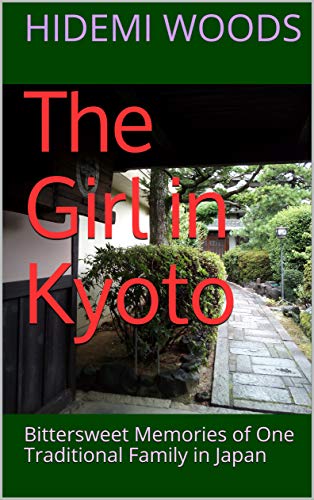
  • The Girl in Kyoto by Hidemi Woods

    The Girl in Kyoto by Hidemi Woods

    Kindle and Audiobook available at Amazon.com

    The house was built when I was nine years old at the place where our old house was torn down because it was too old to live in. That old house was built about 100 years ago. My ancestors lived at exactly the same spot generation after generation for over 1000 years since my family used to be a landlord of the area. We are here for around 63 generations. My father succeeded the family from my grandfather, and I would have been the next successor if I hadn’t left home to be a musician. Because my father failed the family business and didn’t have the next successor for help, he had sold pieces of our ancestor’s land one by one. Now his money has finally dried up and he can’t afford to keep the last land where the house stands. When I dropped out college and left home for Tokyo to be a musician a long time ago, I thought I would never come back to this house again. I have made unplanned visits since then, but I assumed it would be the last visit each time. I was accustomed to a farewell feeling toward the house in a way and I departed with no particular emotions this time either. The cab was running through my familiar neighborhood where I spent my entire childhood. It was still shabby as it used to be. The cab drove through old houses of my childhood friends where I used to play with them, and under the overhead train bridge where I ran into perverts so many times. From the window, I saw the elementary school I went to, and the sidewalk my first song came to me while I was walking on. The bookstore where my father bought me my first English dictionary and also where he spotted his missing cousin. A place where a milk factory used to be that I waved to its plastic cows beside the gate every time I passed by in my father’s car. The old temple where my late grandparents used to take me and let me feed doves. Then something struck me and I suddenly realized. It wasn’t just the house I was losing. I was losing my hometown and departing from my childhood. I would never be in this neighborhood again because it was going to be an unrelated, foreign place from now on. Although I had always hated my neighborhood, that thought brought a lump to my throat and soon I found myself crying. I was stunned at this unexpected feeling. If I hadn’t been inside a cab, I would have wailed.

    The Girl in Kyoto: Bittersweet Memories of One Traditional Family in Japan

    Kindle and Audiobook available at Amazon.com