>>> NEW ALBUM “Good Enough by Hidemi Woods” Streaming [Spotify] [Youtube Music] MP3 purchase[Amazon Music][Apple Music]

  • My Homecoming

    My Homecoming

    My parents never approve of my career as a musician and keep attacking me for it, but I visit them every second year or so as a nice gesture. When I return home, I do so without telling them beforehand. I’ve learned the tactics from too many miserable visits I made in the past, in which they had prepared numerous ways to criticize me for being a musician once they knew my homecoming. Not to give them time for a plan to attack me, I call them near their home pretending I’m accidentally visiting the area and have spare time to drop by although I’ve carefully planned the trip for months.

    I did that last week. It took me seven hours to get to my hometown, changing from a plane to a bus, and then to a train. I called my parents only to find out that they were out with my younger sister who now lives abroad and happened to return home. I couldn’t come home as my parents were occupied with my sister yet again.

    Since my partner was also going to visit his father’s home, I joined him instead. Not like my parents, his father is supportive for him and is always nice to me. But on this particular occasion, his father criticized our ways of living as musicians. He didn’t stop there and began to put down our new apartment and its location even if he had never been there. I didn’t understand what was going on. Do people pick up groundless slander when they get old? I left with disappointment for the hotel I had booked for the night.

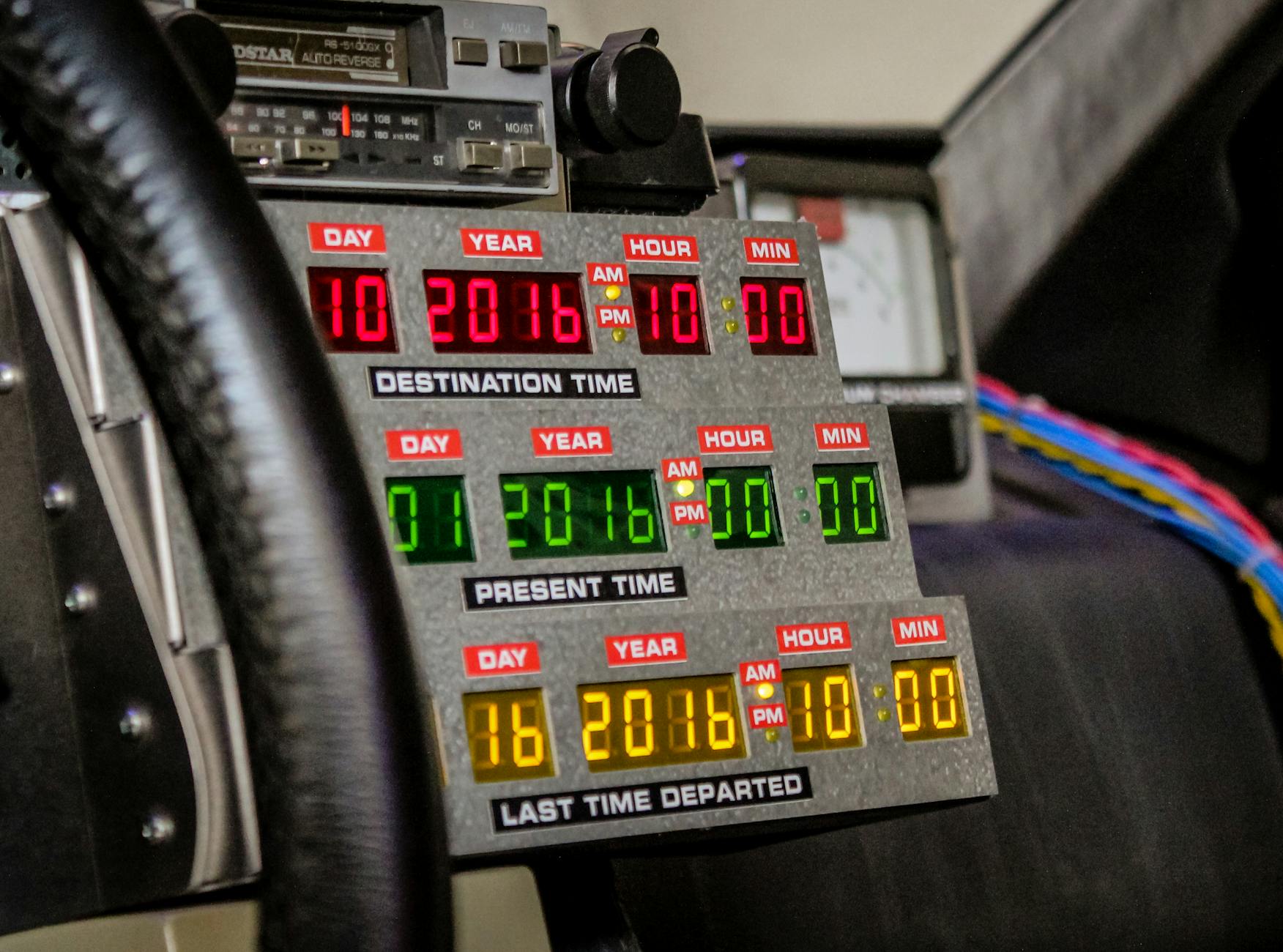
    The hotel was situated next to a movie theme park. In the room, my most favorite movie, ‘Back to the Future’ was free to watch. I watched it again over and over during the stay and that cheered me up. Parents used to be young with full of hope. We could get along with them if we went back time…

    Episode from

    Cats, Dogs and Kyoto, Japan by Hidemi Woods

    Kindle and Audiobook available at Amazon.com

  • Gold Dust

    Gold Dust

    “Would you believe it if I said gold dust could fall on you?” I was asked out of nowhere by Kuri-chan who sat behind me in the classroom when I was a senior in high school. I had known her since junior high and we had chatted casually all the time. Although we had never belonged to the same group to hang around, the last year of high school made us closer as we were in the same class sitting next to each other. She abruptly asked this question with strange solemnity, looking set on confiding her big secret. I had never seen her like this.

    While I had no idea what she was implying with the question, I answered I would. I thought someone who was seeing the meteor shower was so excited that she or he felt that gold dust was showering on her or him. Or, someone having the happiest moment in the snow might feel the snow gold. Or, gold dust was simply an analogy to an inconceivable happening that made someone very happy. Those thoughts led my answer to yes, on which Kuri-chan hesitantly began to explain her question.

    She had visited frequently a certain shrine where gold dust fell on a person who believed. And she wanted me to come. I promptly asked her if it had ever fallen on her. She said it hadn’t because she hadn’t believed enough. Then I asked if she had ever seen it fall on anyone. Her reply was no and she added, “But there are people who have seen it.” My head got filled with doubt and questions. How often does it happen? How much does gold fall when it happens? By what size? How is it collected when it is sprinkled all over her or him? Are a broom and a dustpan provided near at hand? Don’t other people scramble for the fallen dust to steal it? How do you declare it as yours? And when you collect it safely, where should it be brought? Can it be cashed out? Does it fall at a time with an enough amount to make a living? I couldn’t subdue my curiosity, greed, and weird self-confidence. What if it fell on me today? Actual gold dust, not an analogy, could be possible when it comes to me.

    I followed Kuri-chan to the shrine after school, feeling as if I was going to a casino, although I sensed it was some sort of cult. The shrine was in the vast, luxurious premises. There were many people in the main hall, mostly middle-aged and elderly. They were intently praying, which seemed waiting for gold dust to me. A large framed portrait of the founder of the religious sect was hung on the front wall of the hall. Kuri-chan told me that gold dust fell on him first. I somehow refrained from asking her if he built this cult with the money from that gold dust. In my mind, though, I was thinking it would fall quite an amount.

    I sat face to face with Kuri-chan inside the hall and she put her hand above my forehead. She was going to pray for me and gold dust would fall on me if I believed. I was told to keep my eyes closed until the praying was over. It lasted for about five minutes and I believed hard that gold dust was falling on me now. “It’s done,” She said. I opened my eyes and looked for the dust around me. None. I asked her, “Didn’t only a bit fall?” She smiled wanly and said no, looking surprised that I thought it would happen to me on the first try.

    I was led to a small room for a new comer. A group of ten new comers was greeted by an unnaturally friendly middle-aged woman. She told the story about gold dust falling on the founder but didn’t explain how to cash it out to the end. When we were leaving, a woman who was an acquaintance of Kuri-chan ran toward us and said hello. She offered a ride to the bus stop. She casually asked where I lived. She said she knew the area well and would drive me home. I began to feel uncomfortable. I declined repeatedly, but she insisted strongly. The car finally stopped near my house and I said goodbye. To my surprise, she told me to let her meet my parents. I asked why and she said she wanted to tell the story about the gold dust to my parents. She gave me a ride to recruit. I was too stupid to know earlier. I said my parents were out for work, but she said she would wait. I said they would come home late because they were farmers, but she was adamant about waiting. I asked her to leave, but she wouldn’t let me out of the car. I felt scared as if I was kidnapped. Kuri-chan joined me and asked the woman to let me go home. With repeated angry begging from two of us, she finally gave in and released me.

    Next day at school, Kuri-chan apologized to me about how it had gone. “It should never be that way. Trust me. I didn’t know that woman was wicked”, she said regretfully. A few days later, she asked me to go to the shrine together again. I rejected. She asked, “Why? You said you believed gold dust would fall.” I still believed it but wasn’t interested in the cult. I thought if gold dust fell on me, it would happen anyway, with or without a cult. I’ve never joined a cult. But the fact remains that I believe in miracles…

    Episode from

    Cats, Dogs and Kyoto, Japan by Hidemi Woods

    Kindle and Audiobook available at Amazon.com
  • Sunrise / Hidemi Woods

    Sunrise / Hidemi Woods

    LISTEN FULL TRACKS [AmazonMusic][Spotify][AppleMusic] HIDEMI / Hidemi Woods

    Sunrise
    
     Worked so hard
     Did my best
     Yet my life
     Never got better
     Tell me when
     I can rest
     So much I don't know
     Doesn't matter
     Life is cruel
     Full of pain
     Whom would I
     Call for a helper?
     Will it shine?
     Will it rain?
     So much I don't know
     Doesn't matter
     Worries are around me always
     In any ways
     Let wind dry away the tears
     To clear my eyes
     Even through this lonely, dark night
     I'll be all right
     'Cause there will come
     Another sunrise
     Did I win?
     Did I lose?
     Where should I
     Look for the answer?
     Am I rich?
     Am I poor?
     So much I don't care
     Doesn't matter
     Problems wait and see how I face
     in any case
     Bad thinks fall upon me sometimes
     Good ones may likewise
     Even toward this dreary, bleak sight
     I'll be all right
     'Cause there will come
     Another sunrise
     Worries are around me always
     In any ways
     Let wind dry away the tears
     To clear my eyes
     Even through this lonely, dark night
     I'll be all right
     'Cause there will come
     Another sunrise
     Going slow
     It's my walk
     Feel no need
     Ending up faster
     People talk
     Let them talk
     So much I don't care
     Doesn't matter
     Doesn't matter
     Another sunrise
     Sunrise 

    LISTEN FULL TRACKS [AmazonMusic][Spotify][AppleMusic] HIDEMI / Hidemi Woods

  • A Picture-Card Show

    A Picture-Card Show

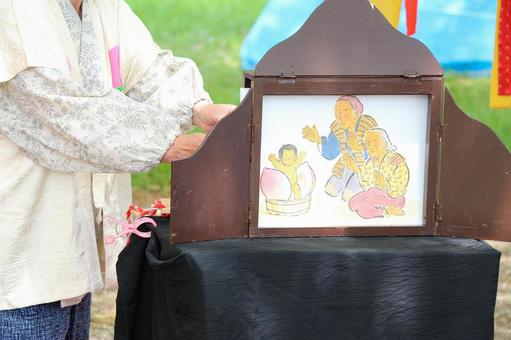
    I was absorbed in one kind of play when I was about seven years old. It was paper play called ‘kamishibai’ in Japan. It’s a picture-card show in which a performer tells a story while showing a picture that corresponds to it. A performer impersonates the characters to say their lines and flips a picture to the next one when the scene changes. It’s a sort of street performance that is hardly seen these days. But when I was little, an old picture-card showman came to the small park near my house every two weeks or so. He would walk around my neighborhood while ringing a bell to let children know the show was coming.

    When I heard the bell, I would spring toward the park clenching small change in my hand. The show was free, but the performer sold cheap snacks and candies before the show. His theater was his bicycle. On the back of the bicycle, a big wooden box was fixed that contained both the pictures and candies. Once the show started, the box transformed into the picture holder. By tacit agreement, children who had bought candies stood in the front and those who hadn’t stood on their toes in the back to get a view.

    Although the story itself didn’t interest me so much, I loved the experience that I saw a live performance while eating delicious snacks. It was a luxury to me. Probably because I liked it too much, I asked my parents and got a picture-card show play set. The play set was available at a bookstore and came with a sono-sheet. A sono-sheet was a very thin flexible vinyl record on which the story, the lines of the characters and the sound effects all that corresponded to the picture cards were recorded. The instruction for the timing to flip the pictures was also recorded. The story and the pictures were from a popular TV animation program for kids.

    Unlike the picture-card show at the park, with this play set, I was a performer. Since there was a vinyl to be played along with it, I could sit in front of the picture holder and watch it as a lone audience while listening to the record. Only, I wasn’t interested in being the audience. I’d rather stood behind the picture holder and flipped the pictures according to the instruction played on the record. The characters’ lines were printed on the back of each picture and I read them along with the record. The number of the picture cards were over twenty and I practiced flipping each one of them in the perfect timing and reading the lines with emotions by imitating the voice actors on the record. That was my favorite play of my childhood and I spent a lot of time and energy every day.

    The funny part was, I didn’t need any audience. I practiced intently not to show the play but to perform perfectly. And I performed exclusively for myself. This play couldn’t be accomplished without the record player that sat in the guestroom of my house. I would sneak in there to play with the set because I couldn’t concentrate on my performance if someone heard or saw it. In case my younger sister asked me to play it to her, I drove her away. Not to be bothered by anyone, I didn’t even turn on the light of the room. I would play the show along with the record alone in the dark, and relish satisfaction and joy when I thought the performance went perfectly.

    Recalling my favorite childhood play now, it awfully looks similar to the way I engage in my work of music. I guess I make my songs strenuously for perfection not for audience’s reception. I always thought I pursued people’s attention and stardom, but it wasn’t true as long as I remembered how I felt happy in my childhood. That explains why my songs don’t ever sell. I perform to no audience. It seems that’s the way I liked, and the way I’m destined for…

    Episode from

    Cats, Dogs and Kyoto, Japan by Hidemi Woods

    Kindle and Audiobook available at Amazon.com

  • The Dog with An Eternal Life

    The Dog with An Eternal Life

    There was a small old cemetery near the house where I grew up. As the Japanese law hadn’t been changed to cremation until I left home, all of my ancestors were buried there when I was a child. A patch of land was allocated to each family in our hamlet of an old city Kyoto, and a family would divide the patch into individual graves for the deceased. Our family’s patch had about ten small graves each of which was marked with a few small insignificant stones. It was a very primitive burial site that young people nowadays wouldn’t believe.

    My grandmother used to accompany me when she visited there twice a year. We would bring incense sticks, a box of matches, stale cookies and a tin kettle filled with water. She would stick lighted incense into the ground of each grave, put a cookie beside it and spilled some water from the kettle onto the ground. Since the stones didn’t bear names, who was, or were, under the particular grave depended on my grandmother’s memory and what she was told. After we finished praying to each grave, she always said, “Now, the dog,” sounding like the most important event remained. And she would stick the last incense and spill the rest of water along with the last cookie onto the foot of a weed-grown mound that was beside the narrow trail to our family graves. Under the mound was the place where our family dog had rested in peace.

    I had never kept a dog but my father had. My grandfather reigned harshly over his family members and never allowed me to keep a dog. But he hadn’t started his hobby of growing chrysanthemums when my father was a child. No chrysanthemums meant an approval for a dog. When my father told me that he had kept a dog, I couldn’t picture that a dog was running freely in the yard of our house.

    From time to time, I visited the cemetery with my father. His main purpose there was to pull out the weed that easily gulped up the entire grave patch, rather than to pray. After clearing up the ground of our ancestors’ graves, he would pray to each grave shortly. And in the end, he prayed to the mound, for his dog. Although among our ancestors, there were his brothers who were twins and died shortly after birth, he prayed for his dog longer than for them. Seeing him do that every time, I knew how much he loved his dog. That also explained my grandmother’s ritual for the dog’s grave. He was an important member of the family back then.

    According to my father, the family never decided or even talked about keeping the dog. He was a stray dog that showed up one day from nowhere, and kept coming. Soon he stopped leaving and just began to stay in the yard. My father fed him and he slept under the eaves of our house. That was how they got to keep a dog. He was a big dog with long fluffy white fur. My father named him Maru, that means ‘round’ or ‘circle’ in Japanese, because he looked like a big white hairy ball. In those days, keeping a pet was so easy and casual that Maru didn’t wear a collar and wasn’t on a leash. They had never taken him for a walk because it was unnecessary. He was strolling and running around the yard all day. Although he had died long before I was born and I had never seen him, it was one of my customs to pray to Maru on a visit of our family cemetery.

    I had wanted to keep a dog all through my childhood but never been allowed because my grandfather filled the yard with his chrysanthemums. When I was a teenager, my first boy friend gave me a big white stuffed-animal dog for my birthday. My father looked at it affectionately and said, “It looked exactly like Maru.” Instead of to a live dog that I couldn’t have, I named that stuffed-animal dog Pon-maru by mixing my nickname ‘Hidepon’ and ‘Maru’. He became my official make-believe pet. A few years later, I left home. My grandparents passed away. The family house was demolished and the site was sold. The rest of my family moved out of Kyoto. The custom to visit the family cemetery was gone. Only, Pon-maru still lives with me in my apartment that is far from my hometown, in a shape of a big, a little-grayish fur ball.

    Episode from

    Cats, Dogs and Kyoto, Japan by Hidemi Woods

    Kindle and Audiobook available at Amazon.com